
YU Design: 25 Products That Represented the Best of 1980s Yugoslav Design
Pročitaj tekst na srpsko-hrvatskom!
Today, when discussing the finest examples of Yugoslav industrial design, certain names are almost taken for granted: Kralj’s Rex chair, Mächtig’s K67 kiosk, Savnik’s telephones and Digitron calculators, Elan skis, Tomos engines… Yet it is interesting to return to a time when these objects had not yet become part of design history and to see how they were evaluated when they were still newly created, contemporary products of Yugoslav industry.
This is precisely what the Zagreb-based magazine Start did when, in collaboration with Goroslav Keller, one of Yugoslavia’s most prominent design theorists, it compiled a selection of the 25 best-designed Yugoslav industrial products in April 1987.
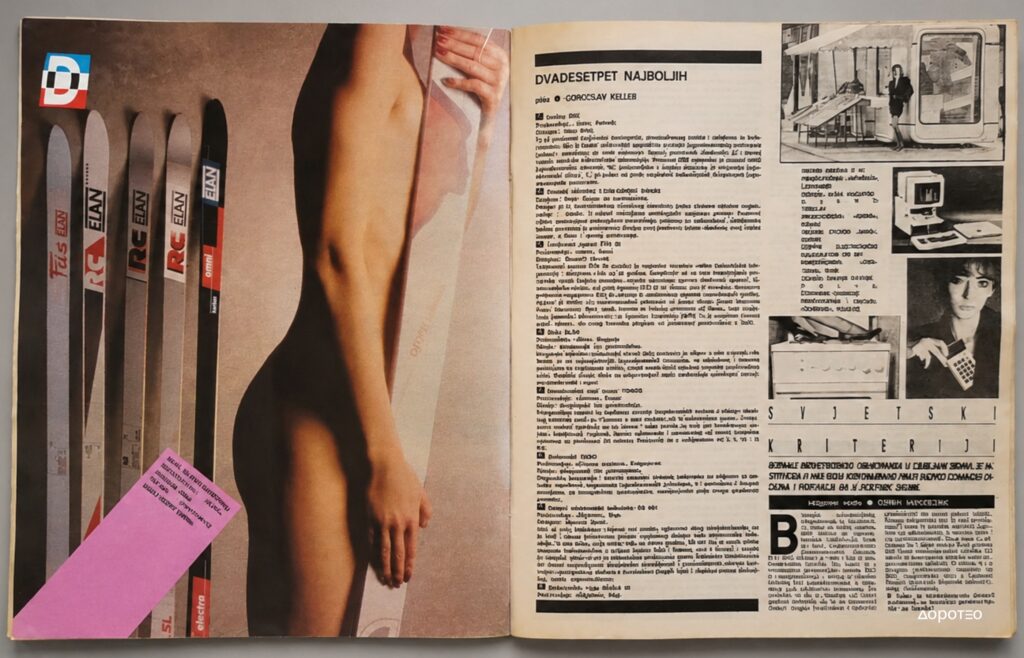
Keller did not base his selection solely on aesthetic criteria. The range of industrial sectors represented, international awards, market success, user-friendliness and ergonomics were all taken into consideration, along with something that was clearly particularly important to him – the ability of Yugoslav design to create original products rather than copy what already existed on Western markets.
This is why, today, the list represents much more than a selection of 25 successful products. It offers a snapshot of Yugoslav industry and design culture at a particular moment in time: from furniture and household appliances to telephones, calculators and computers, as well as cars, skis, shipbuilding and even military aircraft.
It is particularly interesting that Keller openly acknowledges the striking dominance of Slovenian manufacturers and designers in the selection – almost 90 percent – arguing that this was not the result of an editorial decision, but rather reflected the actual state of Yugoslav industrial design at the time.
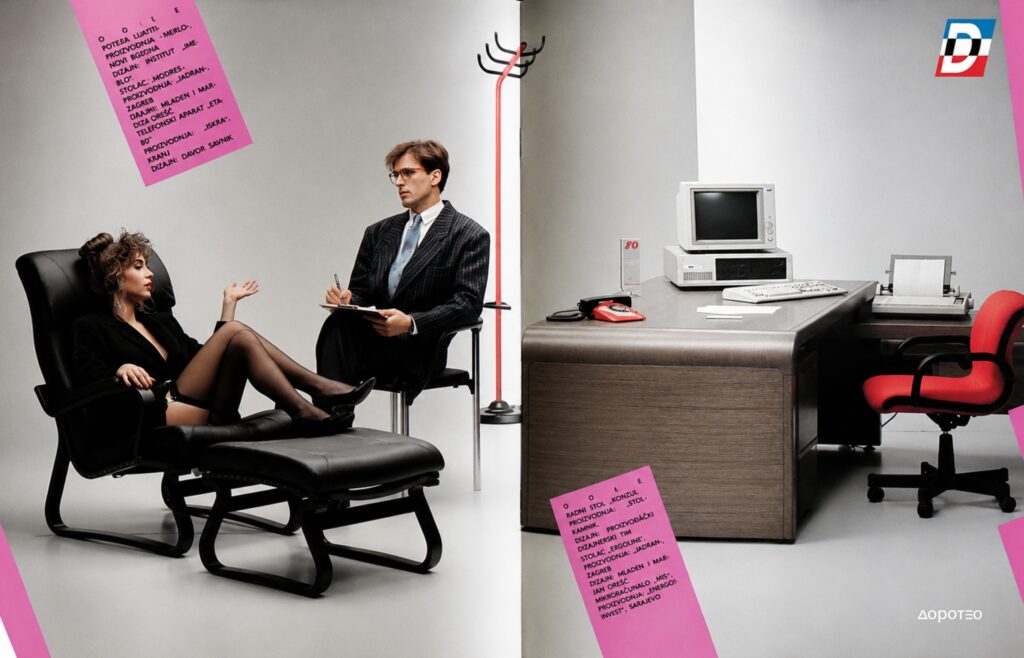
Perhaps the most important idea in Keller’s text, however, lies in the question of what makes a product genuinely Yugoslav. For Keller, the answer was not simply where it was manufactured, but whether it embodied domestic knowledge, development and identity. The most successful examples, he believed, were those that did not emerge from copying Italian, American, French or Scandinavian design, but from developing products intended to meet the needs of local users – products whose very authenticity allowed them to compete beyond Yugoslavia.
Such products, Keller concludes, could justifiably bear the label: DESIGNED AND MADE IN YUGOSLAVIA.
Below, we reproduce Keller’s selection, “The Twenty-Five Best,” in full, in its original form as published in Start, issue no. 475, 4 April 1987.
THE TWENTY-FIVE BEST
1. REX Chair
Manufacturer: »Stol«, Kamnik
Designer: Niko Kralj
A product based on an original concept, careful consideration of the market and its requirements, and functionality. It was capable of meeting the specific needs of Yugoslav consumers (folding furniture for small apartments). Product development also included the development of high-volume industrial production technology. REX became a successful export product of the Yugoslav economy. A number of manufacturers around the world plagiarised the original Yugoslav design. It was one of the first successfully industrially designed Yugoslav products.

2. LJUBLJANSKA BANKA Visual Identity
Designer: Petar Skalar with collaborators
An example of a coordinated visual identity for a complex service organisation – a bank. In the Yugoslav context, it was an exceptionally successful example. The business objectives established by the marketing strategy were fully achieved: through the application of design, Ljubljanska Banka strengthened its corporate and market identity, its market image, and consequently the scope of its business operations.
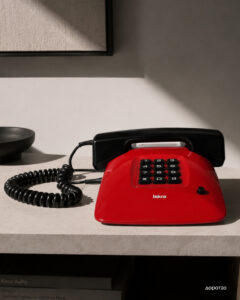
3. ETA 80 Telephone
Manufacturer: »Iskra«, Kranj
Designer: Davorin Savnik
The ETA 80 telephone was the result of more than 20 years of successful collaboration between a major industrial corporation and a designer. Their collaboration encompassed a range of industrial products, among which telephones occupied a particularly important place. Through systematic work, from the first ETA 32 telephones to the present day, this collaboration was crowned with complete success. The ETA 80 was an archetype of the telephone of the 1980s. It received a number of international awards for good design (Gute Industrieform, Hannover, BIO), including the »G Mark«, awarded by Japan’s Ministry of International Trade and Industry (MITI). It was a successful Iskra export product and, by that point, had been plagiarised by eleven manufacturers in the United States.
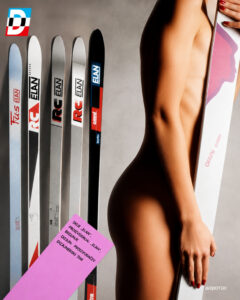
4. ELAN Skis
Manufacturer: »Elan«, Begunje
Design: Manufacturer’s design team
The integrated technical and technological development of skis placed »Elan« at the very top of the global industry. One of Yugoslavia’s most successful exporters, it maintained a stable and permanent position on the world market, consistently ranking among the world’s four largest ski manufacturers. The graphic design of the skis appropriately rounded off the company’s overall research and development efforts.
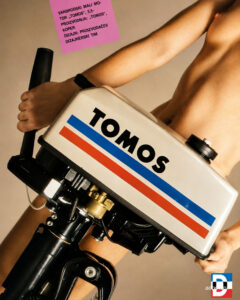
5. TOMOS Small Outboard Motor
Manufacturer: »Tomos«, Koper
Design: Manufacturer’s design team
Years of effort devoted to the in-house development of outboard motors within the company’s own institute brought »Tomos« to the very top of this industrial sector worldwide. »Tomos« motors were fitted to boats and small vessels on all five continents. Durability, longevity, ease of maintenance and the ability of users to service the motors themselves were their principal advantages. They were produced in 3, 4, 10 and 18 HP versions.
6. YUGO Automobile
Manufacturer: »Crvena zastava«, Kragujevac
Design: Manufacturer’s design team
The original bodywork and proprietary technical solutions provided an appropriate response to the needs of certain segments of Yugoslav consumers, as well as consumers in other countries, for a compact automobile intended primarily for urban driving.

7. DB 801 Pocket Electronic Calculator
Manufacturer: »Digitron«, Buje
Designer: Davorin Savnik
Although this calculator had already been overtaken by time, mainly as a result of miniaturisation, it nevertheless remained a unique example of successful design in the early electronics industry. At the time, a little more than ten years earlier, the DB 801 was among the first pocket calculators in the world (after the United States and Japan, the first in Europe) and represented the state of the art in this branch of industrial production. The calculator was characterised by design ingenuity and a carefully considered relationship between its control system and the user that had yet to be surpassed (the keys and display were angled towards the user – in other words, it was ergonomic).

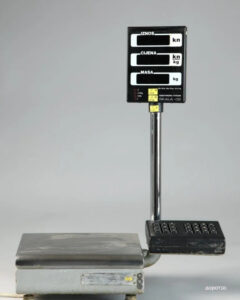
8. SCALA 02 Electronic Scale
Manufacturer: »Digitron«, Buje
Designer: Vladimir Robotić
Another example of proprietary technical and technological development. It was the result of product research and development. The product received the »Gute Industrieform« award at that year’s international electronics fair in Hannover.
9. NEPTUN Armchair-Beds
Manufacturer: »Meblo«, Nova Gorica
Design: »Meblo« Institute
At the time, this product challenged Yugoslav stereotypes about the conventional bed. In the typically small Yugoslav apartment, it provided an answer to the need for a space that could serve both living and sleeping purposes.
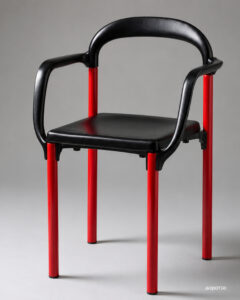
10. MODRES Office Chairs
Manufacturer: »Jadran«, Zagreb
Designers: Marijan and Mladen Orešić
The design concept was developed with high-volume industrial production in mind. Ease of transportation was taken into account, while the designers’ greatest efforts were focused on achieving optimal ergonomic solutions.
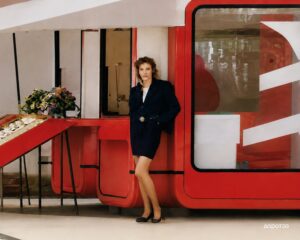
11. K67 Kiosk System
Manufacturer: »Imgrad«, Ljutomer
Designer: Saša Mächtig
A unique Yugoslav example of designed municipal equipment and urban furniture (street furniture). Based on a modular extension system (Baukasten), the kiosk system could meet a wide range of needs in urban spaces. The product was selected for the collection of the Museum of Modern Art in New York.
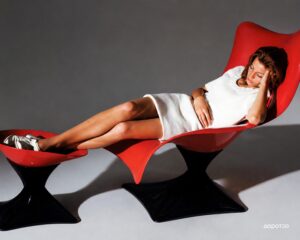
12. GONDOLA POČIVALNICI Series of Armchairs
Manufacturer: »Meblo«
Designer: Oskar Kogoj
An exceptional example of successful collaboration between an ergonomics specialist (O. Sušnik) and a designer (Kogoj), resulting in a product that attracted the attention of both the professional community (a number of exhibitions were organised) and consumers when it was launched. The product marked an era in which the average Yugoslav aspired to greater comfort and a higher standard of living.
13. SLATKI DOŽIVLJAJ Dessert Range
Manufacturer: »Kraš«, Zagreb
Design: Manufacturer’s design team
In the Yugoslav context, this range represented an exceptional effort to create a premium product. The attention devoted to packaging was a logical complement to the long-standing efforts of »Kraš«’s development department to ensure the quality of its products.

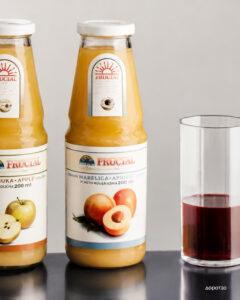
14. FRUCTAL Fruit Juice Range
Manufacturer: »Fructal«, Ajdovščina
Design: »Delo« Marketing Studio
An example of successful long-term collaboration between a manufacturer, designers and an advertising, or marketing, agency. It demonstrated how coordinated design and marketing efforts could achieve stable, long-term commercial success. The collaboration extended from establishing the basic constants of the manufacturer’s visual identity and a consistent promotional message (»Fructal in cooperation with nature«) to the conception of new products.
15. MURA Clothing
Manufacturer: »Mura«, Murska Sobota
Design: Manufacturer’s design team, with external fashion designers
The undisputed long-standing leader in ready-to-wear clothing production, intended equally for the domestic market and export. The strategic backbone of »Mura«’s development lay in combining the requirements of inexpensive ready-to-wear clothing production with the exclusivity of fashion design. In practice, »Mura« also demonstrated that good design pays off commercially. Design and marketing functions, particularly advertising, were successfully integrated.
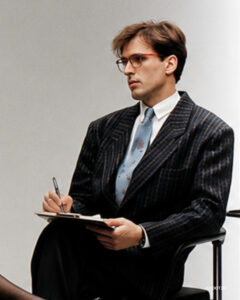
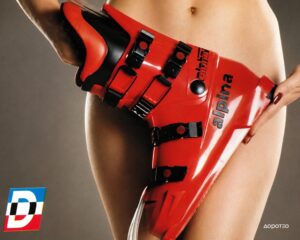
16. ALPINA Ski Boot
Manufacturer: »Alpina«, Žiri
Design: Manufacturer’s design team
An exceptional ski boot manufactured in high-volume industrial production. It was the result of serious research into the specific requirements placed on a product of this kind. »Alpina« was one of the leaders on the world market, and its products commanded high prices thanks to their quality and industrial design.
17. Fighter Aircraft »Galeb« and »Orao«
Manufacturer: »Soko«, Mostar
Design: Manufacturer’s research and development team
The result of domestic development, this aircraft had for years attracted the attention of the international professional community. It was successfully exported. A presence on the world stage in a field as complex as military combat aircraft had to inspire a sense of satisfaction and self-confidence.

18. Range of Drinking Glasses
Manufacturer: »Steklarna«, Hrastnik
Designer: Franc Papež
For some twenty years, this manufacturer of household glassware had cultivated its own concept of good design. Clean, clear forms emphasised all the advantages of the basic material – glass – in a contemporary, simple and modern manner.

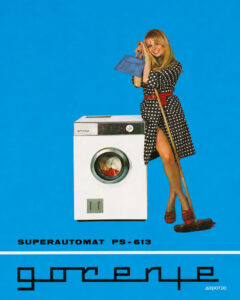
19. Complete GORENJE Range of White Goods
Manufacturer and design: »Gorenje«, Velenje
In the case of »Gorenje«, it was difficult to single out one product, because the company based its entire production on high-quality design. »Gorenje« consistently and systematically developed its own design style. A successful collaboration and balance, with clearly defined professional responsibilities, had been established between design and marketing. The promotion of new products and ranges clearly demonstrated this (for example, the »Zdravo-rjavo« campaign several years earlier).
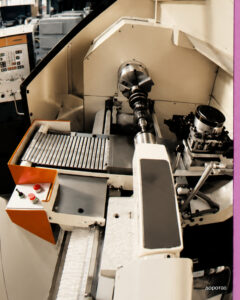
20. PRVOMAJSKA Programmed Lathes
Manufacturer: »Prvomajska«, Zagreb
Design: Jasenka Mihečić and the Prvomajska Institute
Interdisciplinary collaboration between engineers and designers is essential to the successful development of a product as structurally complex as a lathe. Since this was a product for industrial use (a means of production), the greatest attention was devoted to ergonomics, particularly the ergonomics of the control system.
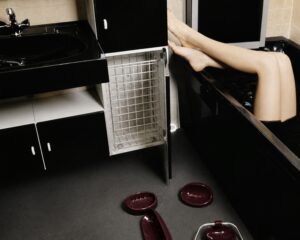
21. KOLPASAN Bathroom Furniture Range
Manufacturer: »Novoles«, Novo Mesto
Design: Manufacturer’s design team
New plastics technology made entirely new concepts in furniture design possible. This was more than clearly demonstrated by the »Kolpasan« range.
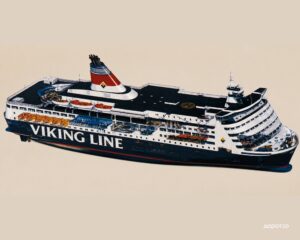
22. Shipbuilding
In terms of the number of orders, Yugoslav shipbuilding was at that time ranked third in the world, after Japan and South Korea. It was an industry of exceptional importance, particularly during the period of economic stabilisation. Shipbuilding was an important factor in stabilising the Yugoslav economy, especially that of the Socialist Republic of Croatia. The prominent position of Yugoslav shipbuilding in the world was primarily the result of domestic research and development characterised by continuity and steady progress. For example, CAD/CAM-based design (computer-aided design and manufacturing) had become an everyday practice at the »Uljanik« shipyard in Pula. The Pula shipbuilder developed its CAD/CAM system for hull-plating design, drawing on the traditions and experience of the Norwegian »Viking« mathematical models. Rijeka’s »3. maj« was working on the construction of the world’s largest catamaran crane. Also worth mentioning were the »Labin« platform, already in operation, and the original slipway construction designed and built by the »Split« shipyard.
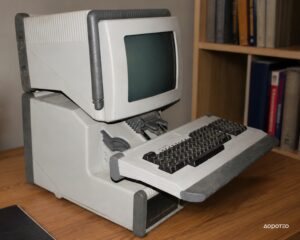
23. TRIGLAV Computer
Manufacturer: »Iskra«, Kranj
Design: »Mak« Studio, Koper
With its own small business computer, »Triglav«, Iskra of Kranj entered the global research and development race in what was then the most rapidly expanding field of electronics. »Triglav« was the result of the proprietary research and development work of Iskra’s institute, which had achieved significant results internationally in the design and preparation for production of semiconductor components, including microprocessors. The significance of this product should be viewed in the context of the direct relationship between the information/computer revolution and industrial development.
24. TOKO Leather Goods
Manufacturer: »Toko«, Domžale
Design: Manufacturer’s design team
Through the outstanding design of its products, »Toko« demonstrated that it was possible, even on this scale, to shape fashion trends and cycles. »Toko« products were successful exports and represented one of the few product ranges capable of satisfying the demanding tourist souvenir market.
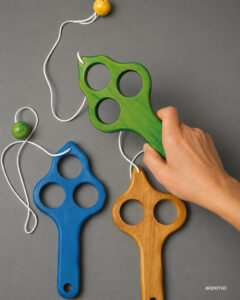
25. CICIBAN Children’s Toys
Manufacturer: »Ciciban«, Miren
Designer: Oskar Kogoj
Successful collaboration between a psychologist and educator (Andrej Frančeškin) and a designer (Kogoj) led to the creation, development and launch of a range of wooden and plastic children’s toys intended for different ages and stages of development. The educational value of these toys in developing children’s motor skills, perception and aesthetic awareness was undeniable. The design placed particular emphasis on the noble qualities of wood as a material.
All images and materials are copyright protected and are the property of doroteo.rs


