
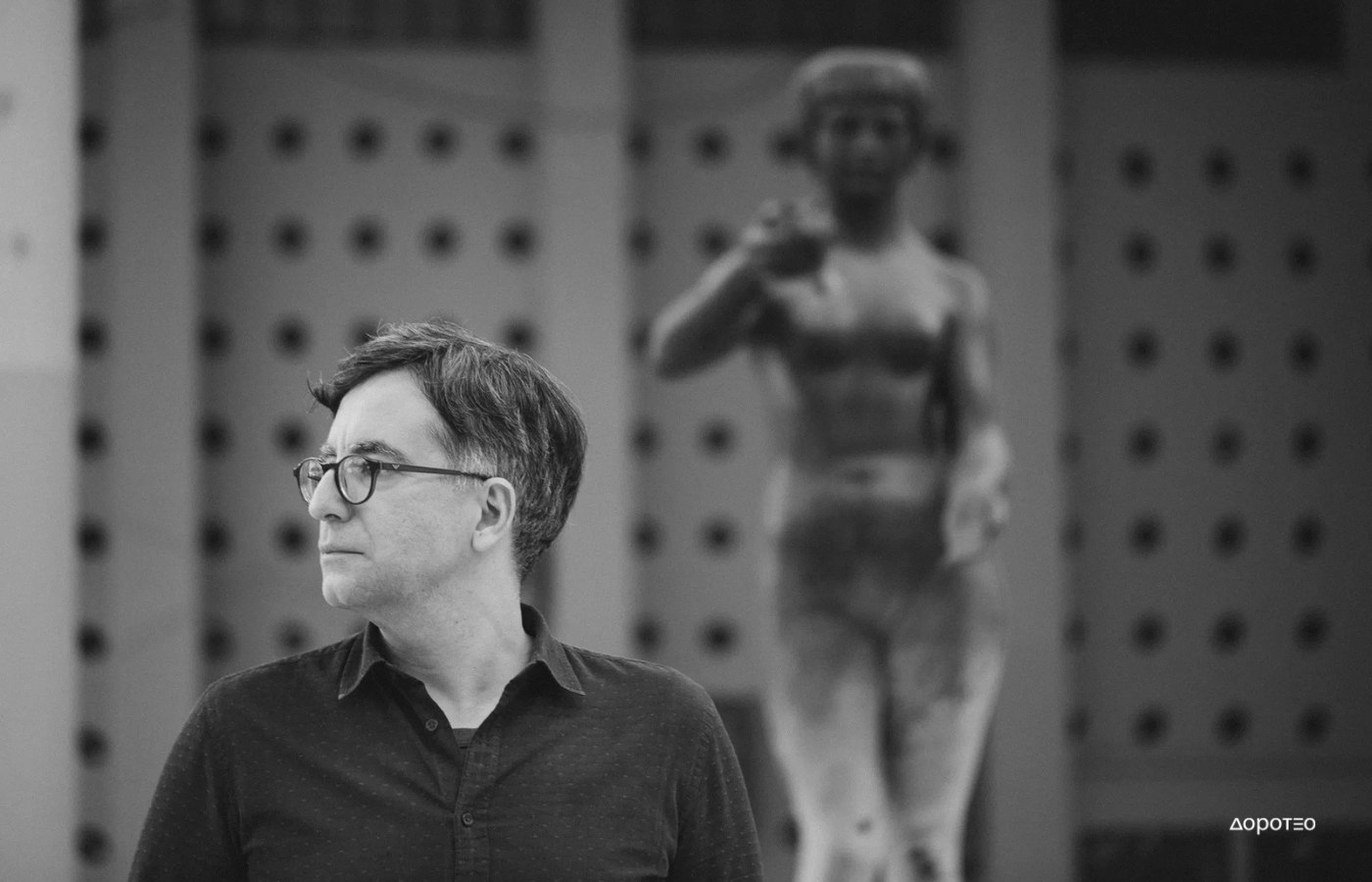
Ivan Medenica / FREEDOM AS RISK
In recent months, the word freedom has been spoken in Serbia almost as if it were a new word. Student protests, a new generation, and the increasingly vocal questioning of institutions have brought it back into the public sphere. Theatre scholar and professor at the Faculty of Dramatic Arts Ivan Medenica shares his thoughts on freedom: where it can be found today, what role art and theatre play in it, and why freedom always entails risk.
1 / In recent months, freedom has been spoken of in Serbia almost as if it were a new word. How do you understand it today – as a professor, an artist, and a citizen?
I understand it primarily from the perspective of a professor, because it was the students who restored its significance – who gave it a new meaning, or perhaps brought back its old one. I am proud that it was precisely the students of the Faculty of Dramatic Arts who initiated the protests and made it possible for us, after a long time, to begin feeling like free people again. Through the protests, they articulated demands for institutions to be freed, for the legal system to (finally) function, and for justice to exist, without fear of the consequences. And the consequences have been serious, above all for the students themselves: arrests, abuse, media smear campaigns. But also for the entire university, including those of us who teach and have supported them.
Still, the most important thing is that their struggle restored meaning to the word freedom. We truly began to feel like free people again – above all because the fear disappeared. Fear had long been the dominant feeling in this society, and I think this is one of the greatest achievements of the student movement: they were the first to free themselves from fear, and in doing so, they freed the rest of us as well.
2 / Is this struggle primarily a struggle for freedom in life, or for freedom of the mind?
The two are closely connected. Until you free your mind and begin to look beyond prescribed norms, you cannot create freer circumstances in which to live either. First, you have to allow yourself to think freely – to ask questions, to question the conditions in which you live and ask whether they can be changed. Only then can the struggle for freer social circumstances begin.
3 / Have you personally felt free in a society that has often not been free?
Freedom has always been one of my most important values, and I have never accepted circumstances that constrain me. As a theatre critic, for example, if I had not been free-minded, I would probably have been afraid to express my opinions publicly. Criticism is a very delicate profession in unfree societies because you can easily make enemies of people in positions of authority. And sometimes that does happen. In my case, for example, I was not promoted to full professor at the faculty when I should have been, despite having all the necessary credentials. The anonymous vote was used as a form of retaliation, among other things for my work as a critic, even though that had nothing to do with my academic work. Colleagues would often tell me: “Don’t say everything you think until you become a full professor.” I never accepted that.
I recognise the risks that free thought and behaviour always carry, especially in societies that are insufficiently free – and in the case of Serbian society today, one could even say authoritarian. But I consciously chose to ignore that lack of freedom, to suppress my fears and to live in my own “ivory tower” – by which I mean an imagined, free and progressive world of the kind Serbian society has never fully been during my lifetime.
4 / Can theatre today be a space in which this kind of freedom is genuinely felt and created?
There is a kind of theatre people go to in order to be entertained and to have the views they already hold reaffirmed – and that kind of theatre does not expand the space of freedom. But there is also theatre that puts us in a position to question dominant values. This is a tradition following in the footsteps of the great German playwright, poet and director Bertolt Brecht, in which theatre becomes a tool that helps us understand that society can be changed.
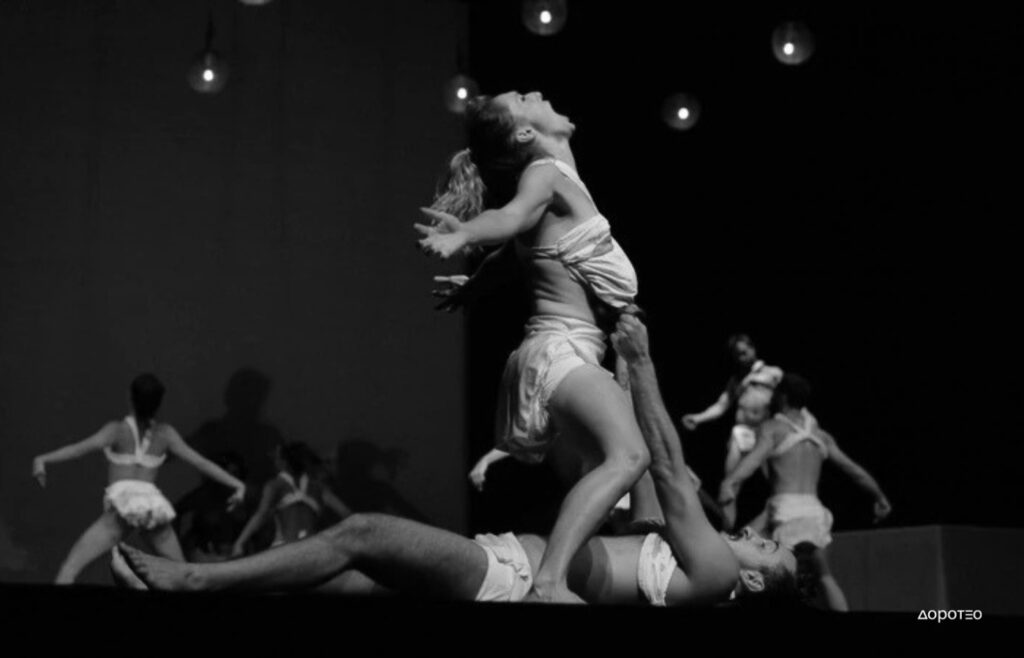
I also believe in theatre based on close, intense contact between performers and audiences, where there is a continuous and eruptive flow of energy and thought. One of the theatrical experiences that had the greatest liberating effect on me was the production Mount Olympus, which I brought to the 51st Bitef as its artistic director. It lasted twenty-four hours. You could leave, come back, fall asleep in the auditorium… That production is the absolute opposite of the world we live in – a hyper-accelerated world in which we constantly have to keep up with things, respond to messages, be present everywhere. Theatre, on the other hand, gives us an opportunity first and foremost to slow down, to pause, and then to feel, experience and think more deeply… Slowing down may be one of the most important forms of freedom today.
5 / Where is the boundary between freedom and responsibility?
Personally, I have never found that a difficult question. I am not an advocate of irresponsible freedom, of a kind of freedom that is destructive. Freedom and responsibility are two sides of the same coin. You will not make people free by encouraging them towards self-destructive behaviour. On the contrary – every action that involves freedom must be undertaken from a position of responsibility.
6 / To what extent do artists begin to censor themselves under such circumstances?
One of the biggest problems is precisely self-censorship. There does not have to be a law explicitly prohibiting something. It is enough to know that you might pay a high price for expressing a particular view – and people begin to censor themselves. A climate of unfreedom can very easily turn into self-censorship.
7 / Can you see a generational difference here – between older artists and younger ones who are just entering the arts?
As people grow older, they often settle into a comfort zone. But a comfort zone is not freedom. Freedom entails risk. If you think freely, you will constantly question the circumstances in which you find yourself, the way you think, and what you do. A comfort zone means a life without risk – and that is the opposite of freedom.
Young people today have a paradoxical kind of freedom. Unlike our generations, they know that nothing has been promised to them. They know that, in this historical phase of decadent neoliberal capitalism, they will probably have to work several jobs and that security is not guaranteed. And precisely this realisation – that nothing is given in advance – can become a source of freedom. Because you realise that you have to fight for everything yourself, and that there is no guarantee that what you have won will survive or endure.
8 / What would you say to young people who are trying to carve out a space of freedom today?
The prerequisite for freedom is to think critically about the circumstances in which you live. You have to confront problems and understand that they will not be resolved without you. No solution is going to fall from the sky. Freedom is not a given. It must be fought for continuously – beginning with the freedom of one’s own mind.
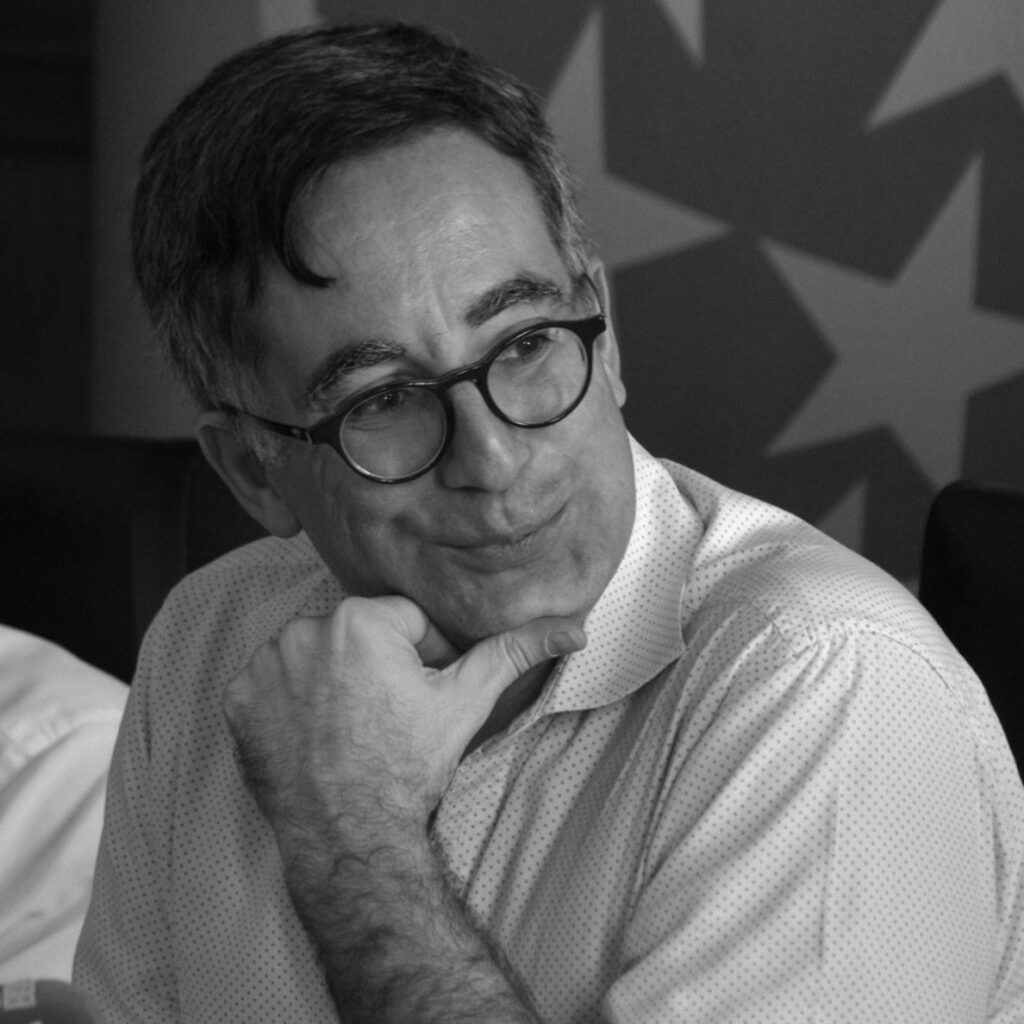
Theatre scholar, theatre critic and professor at the Faculty of Dramatic Arts in Belgrade and the Faculty of Dramatic Arts in Cetinje.
He has served as artistic director of both Sterijino Pozorje and Bitef, as well as a selector for both festivals.
He writes, teaches and speaks about theatre, art and society.
All images and materials are copyright protected and are the property of doroteo.rs


